Bus Simulator - 3D Bus Games
Innovative Gaming StudiosRole Playing
4.353.00 Reviews
- Version
- 1
- Installs
- 10.00M
- Age Rating
- Everyone
Screenshots
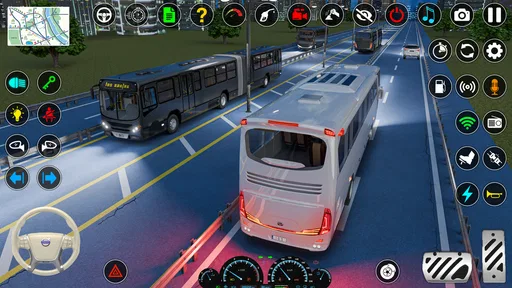
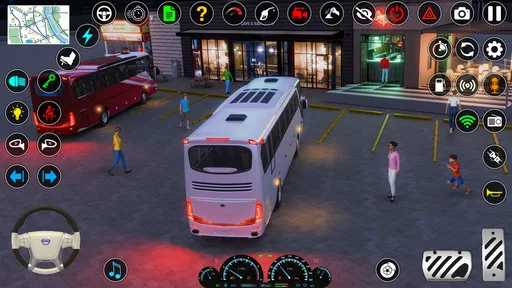
Our Review of Bus Simulator - 3D Bus Games
 Analysis by Appyee
Bus Simulator - 3D Bus Games puts me in the driver’s seat with a straightforward idea: take control of a bus, follow the road, and try to deliver a steady driving experience rather than a frantic arcade challenge. After spending time with this role-playing game, I found its appeal comes from the simple routine of driving. It is the kind of game I can open when I want something calmer than combat-heavy role-playing games, but still want a clear task to focus on.
The game is free to play and comes from Innovative Gaming Studios. It is aimed at Everyone, which fits its accessible premise and uncomplicated presentation. Its current version is 1, and it works on Android 6.0 or later. That broad compatibility makes it easy to consider on an older phone, although the actual comfort of play will still depend on how smoothly the device handles a three-dimensional driving environment.
What interested me most was not the promise of becoming a bus driver by itself, but the mood created around that role. A bus game can feel surprisingly relaxing when the scenery, vehicle movement, road layout, and sound all point in the same direction. Here, the experience is best understood as a light driving activity with role-playing touches, not as a deep vehicle-management simulation or a story-led adventure.
A calm driving idea with a clear identity
My first impression was that the game wants to be immediately understandable. You do not need to learn a complicated fictional universe before enjoying it. The central fantasy is familiar: sit behind the wheel, read the road, steer carefully, and complete the driving task in front of you. That clarity is a strength for short sessions because I can return after a break without having to remember a long sequence of objectives.
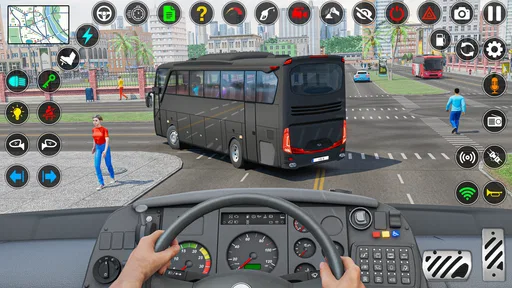
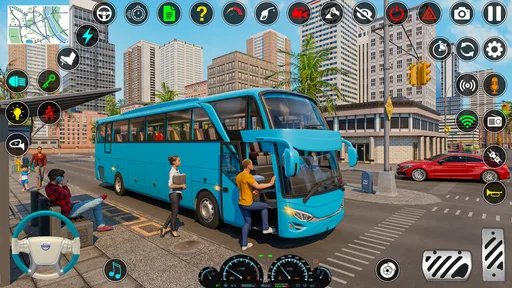
The 3D presentation supports that approachable identity. Roads and vehicles give the game a sense of physical space, while the driving viewpoint keeps attention on movement and positioning. I found that this makes small decisions matter more than they would in a flat, menu-based game. Turning too early, drifting too close to an edge, or treating a bend casually can make the drive feel less controlled.
The most enjoyable part is the change of pace from ordinary mobile games. Instead of constantly rewarding speed, the bus-driving concept encourages patience. I naturally started watching the route more carefully and treating each turn as part of the challenge. That does not make the game complex, but it gives the simple premise a little more personality.
The audience numbers also suggest that the concept has reached a broad mobile audience. The game has passed ten million installs and holds an average rating of 4.3 from around twenty-three thousand ratings. Those figures do not make it automatically perfect, but they do show that the basic bus-driving formula has found plenty of players.
How the visual language shapes the setting
The art direction works best when it keeps the road readable. In a driving game, visual detail is useful only when it helps me understand where the bus is, what direction the route takes, and how much room I have to maneuver. The three-dimensional setting gives the journey a stronger sense of place than a simple top-down road would, but the practical purpose of the scenery remains more important than visual spectacle.
I like this kind of setting because it gives ordinary movement a little atmosphere. A road is not just a line between two points; it becomes the space where I judge distance, prepare for turns, and settle into a rhythm. The bus itself also feels like the visual anchor. Its size changes how I approach corners and makes careful positioning more satisfying than quick steering would be.
At the same time, readers should approach the visuals with the right expectations. This is not the choice I would make for a cinematic driving experience with highly detailed environments or a large, richly developed world. Its appeal comes from recognizable driving situations and an easy-to-read presentation. If you mainly want visual realism, a more demanding simulator may suit you better. If you prefer a light 3D driving game that does not overwhelm you with presentation, the simpler style is easier to appreciate.
One useful habit is to look beyond the immediate front of the bus. Because the vehicle occupies more space than a small car, reacting only when a turn arrives can leave too little time to correct your line. I found it better to scan the road early, anticipate the bend, and make smaller steering adjustments. That approach makes the setting feel less like decoration and more like a working driving space.
Sound, motion, and the rhythm of a route
The audio and movement are important because bus driving depends on rhythm. Even without a complicated soundtrack or dramatic action, a drive can feel engaging when steering, acceleration, braking, and road progress form a consistent pattern. I enjoyed the quieter sections most, where the game gave me time to settle into the route instead of pushing me from one sudden demand to another.
That slower rhythm is also where the game separates itself from many role-playing alternatives. Traditional mobile RPGs often rely on battles, rapid rewards, character upgrades, and frequent visual effects. This game replaces that intensity with attention and repetition. The satisfaction comes from completing a clean drive rather than defeating an opponent or collecting a new ability.
This makes it a good fit for a short evening break or a moment when I want something active but not mentally noisy. A realistic everyday use case would be playing a few drives after work while listening to the road activity and concentrating on smooth movement. I would not describe it as a meditation app, but its steady pace can feel pleasantly low-pressure when I am not trying to rush.
The trade-off is that players who need constant novelty may find the rhythm too restrained. If the pleasure of a mobile game comes from rapid combat, surprise events, or a strong narrative, bus routes may feel repetitive. The game’s mood depends on accepting repetition as part of the experience. I recommend it to people who enjoy improving their control, not to someone looking for uninterrupted excitement.
Another practical tip is to avoid treating every route as a race. Driving faster can make the controls feel less forgiving, especially when the road changes direction. I had a better experience when I used a measured pace and treated braking as part of planning rather than as an emergency response. That small change turns the game from a basic steering exercise into a more deliberate routine.
Where the mechanics fit—and where they do not
As a role-playing game, this title uses a familiar category in an unusual way. It does not immediately present the same kind of character-focused progression I expect from a fantasy or action RPG. Instead, the role comes from inhabiting the job of a bus driver. The game’s identity rests on performing that role through driving, which makes it approachable but also narrower than a full-scale role-playing adventure.
I see that narrow focus as both its main strength and its main limitation. The strength is clarity: I know what kind of attention the game asks from me. The limitation is that players wanting deep character development, branching decisions, or a long narrative may not find enough variety here. The free format makes it easy to try, but whether it holds your attention depends on how much you enjoy the driving loop itself.
The controls are most satisfying when I make small corrections instead of sweeping movements. Bus handling rewards anticipation. I try to begin a turn with enough space, keep the vehicle centered, and avoid correcting too aggressively once the bus is already moving through the bend. This is one of the less obvious ways to get more from the game: the challenge is not simply knowing which direction to steer, but managing the bus’s size and momentum with restraint.
Another useful approach is to separate route reading from control input. First, I look at what the road is asking me to do. Then I steer. Players who continuously move their finger or tilt without looking ahead can create unnecessary instability. A brief pause to understand the next section often produces a cleaner drive than constant reaction.
The game is also easier to judge when compared with its usual alternatives. Compared with a conventional RPG, it offers less story and fewer character-centered reasons to keep playing, but it provides a more focused activity. Compared with a serious bus simulator, it is more approachable and less intimidating, though players seeking detailed professional procedures may prefer a specialized simulation. Compared with casual racing games, it exchanges speed and competition for control and routine.
That middle position is important. I would choose this game for relaxed driving practice, casual role-play, and simple three-dimensional road play. I would skip it if I wanted multiplayer competition, a deep progression system, or a highly technical recreation of public transport work. The best alternative depends on what you want the vehicle to mean: a calm task here, a competitive machine in a racer, or a detailed profession in a dedicated simulator.
Who will enjoy the daily-driver fantasy
This game suits players who like familiar jobs turned into playable routines. It can be a gentle introduction for someone who has never tried a driving simulator because the premise is easy to understand. It also works for people who enjoy practicing control and gradually becoming more comfortable with a vehicle’s size and movement.
I can imagine recommending it to a friend who wants a free Android game for short sessions and does not want to learn a complicated combat system. The Everyone age rating also makes its general presentation approachable for a broad audience. Its release on September 2, 2024, places it among newer entries for players who want to try a relatively recent bus-driving title rather than an older game they have already exhausted.
However, I would set expectations honestly. The game is not a replacement for a complete transport-management experience. It is also not ideal for someone who becomes bored when the central action remains similar from one session to the next. The more you enjoy the small details of steering and route awareness, the more likely you are to appreciate it.
Device choice matters too. Since the minimum operating system is Android 6.0, the game can be considered by owners of older compatible phones. Still, three-dimensional driving is more comfortable when the display responds consistently and the device does not struggle during play. I would close other demanding apps before playing and keep enough free space available for a smoother everyday experience, especially on an older handset.
Because the price is free, trying it carries little financial risk. That does not remove the time trade-off, though. I would give it a few focused sessions rather than judging it from a single drive. The first session is mostly about understanding the feel of the bus; the better test is whether you enjoy returning to the road once the novelty of the premise has passed.
The atmosphere after the novelty settles
What stays with me is the coherence between the setting and the mechanics. The bus is large, the road requires attention, and the pacing encourages deliberate movement. When those parts work together, the game creates a modest but recognizable mood: I am not chasing a high score at breakneck speed, but trying to complete a drive with control.
That mood can be surprisingly effective on mobile. Many games compete for attention through constant rewards, while this one benefits from giving the player a simpler task. I found that the quieter structure made successful turns and steady progress feel more noticeable. The game does not need a dramatic story to make driving feel purposeful; the role itself supplies enough context for a short session.
There is still a ceiling to that atmosphere. Without the deeper systems of a management game or the variety of a story-rich RPG, the experience may eventually feel limited. Its mood is strongest when I want a focused routine, and weakest when I expect the game to keep surprising me. That is not a flaw for every player, but it is the central question to ask before installing it.
My recommendation is simple: choose it for approachable bus driving with a calm, road-focused mood, not for a full simulation career. Innovative Gaming Studios has built an accessible free game around a clear role, and the broad install base shows why that idea works for many people. With its 4.3 average rating, Everyone age classification, and support for Android 6.0 and newer, it is an easy title to try if you are curious about casual driving games.
After reviewing it, I would keep Bus Simulator - 3D Bus Games available for relaxed sessions rather than making it my only mobile game. Its strongest qualities are its readable premise, measured rhythm, and the small satisfaction of handling a large vehicle with care. Its weakest point is the limited appeal for players who need deep progression or constant variety. If you enjoy the idea of turning an ordinary bus route into a focused playable routine, Bus Simulator - 3D Bus Games is worth a try. If you want a story, competitive racing, or professional-level simulation, another category will serve you better.
Verdict
Strengths of Bus Simulator - 3D Bus Games
- Large bus selection with distinct handling and visual designs.
- Realistic traffic makes routes feel more dynamic and challenging.
- Simple controls are easy for beginners to understand.
- Multiple camera angles improve visibility while driving.
- Progression gives players reasons to complete more routes.
Limitations of Bus Simulator - 3D Bus Games
- Frequent advertisements can interrupt the gameplay experience.
- Some missions may feel repetitive after extended play sessions.
- Large downloads or updates may use considerable mobile storage.
- Touch steering can feel imprecise on smaller phone screens.
- Performance may vary on older devices with lower-end hardware.
Similar Picks in This Category
View All
Hair Dye
CrazyLabs LTD4.4

Monster High™ Beauty Salon
CrazyLabs LTD4.5

Bus Simulator - Bus Games 3D
Jima Apps4.4

Flight Pilot: 3D Simulator
Wildlife Studios4.1


Super Stylist Fashion Makeover
CrazyLabs LTD4.4
Frequently Asked Questions
What is Bus Simulator - 3D Bus Games about?
Bus Simulator - 3D Bus Games is a driving simulation that lets you take control of different buses and transport passengers through city streets, highways, and other routes. The game focuses on steering, acceleration, braking, traffic awareness, and completing assigned journeys. Depending on the mode, you may also need to follow checkpoints, avoid collisions, manage time, and unlock new buses or locations.
Is Bus Simulator - 3D Bus Games suitable for beginners?
Yes, the game is generally accessible to beginners because its basic controls are easy to understand. Players can usually choose between buttons, a steering wheel, or tilt controls, depending on the version and device. However, precise turns, parking, traffic management, and narrow roads may require practice. Starting with slower routes and learning the braking system makes the first missions much easier.
Does Bus Simulator - 3D Bus Games require an internet connection?
The internet requirements can vary according to the specific version available on Android or iOS. Many core driving missions may work offline after installation, but advertisements, updates, cloud features, leaderboards, or certain online content can require a connection. It is best to launch the game once while connected and check which modes remain available when your device is placed in airplane mode.
Are there in-app purchases or advertisements in the game?
Bus Simulator - 3D Bus Games may include advertisements and optional in-app purchases, as is common with free-to-download mobile driving games. Ads can appear between missions or when claiming rewards, while purchases may unlock vehicles, remove advertising, or speed up progression. Review the store listing and your device’s purchase settings before downloading, especially if children will be playing.
What devices are needed to play Bus Simulator - 3D Bus Games smoothly?
The game should run on many recent Android and iOS phones and tablets, but performance depends on the device’s processor, memory, operating-system version, and available storage. Older or entry-level devices may experience longer loading times, reduced graphics quality, or occasional frame-rate drops. Keeping the game updated, closing background apps, and leaving sufficient free storage can improve stability.
Play our best games!


